
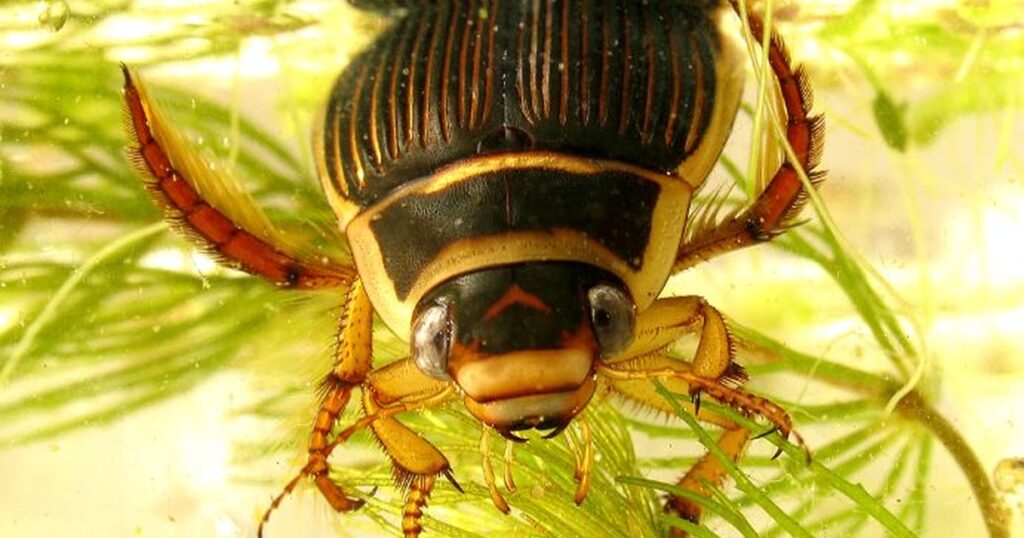
What insect can swim, fly – and hunt frogs?
In this edition of Tiny but Mighty, we introduce another small but fierce freshwater predator: the diving beetle!
Diving beetles (family: Dytiscidae) are true multitalents of the freshwater world. You can usually spot them in ponds and shallow lakes, but these remarkably versatile insects are able to move through water, across land, and even through the air. With streamlined bodies and powerful paddle-like hind legs, they slice through the water at speed and hunt almost anything close to their size, on occasion even small frogs!
Their offspring are even more unbelievable. The larvae, known as “water tigers,” are relentless aquatic predators. They spend their youth actively hunting until it’s time to metamorphose. They abandon the water, burrow into the soil, and disappear underground to undergo their final transformation and pupate.
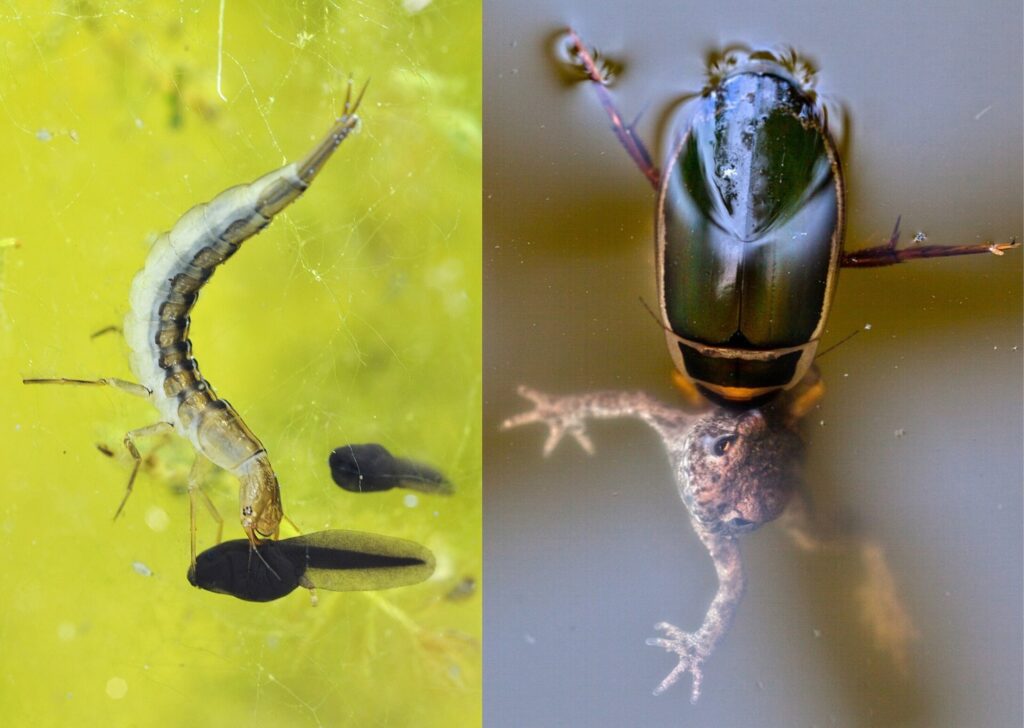
1.) Larvae; Photo by Gilles San Martin licensed under CC BY-SA 3.0; 2.) Adult; Photo source: Wikipedia commons, licensed under CC0 1.0

Nature’s scuba divers
One of their most fascinating tricks is how these beetles breathe underwater. When diving, they trap an air bubble beneath their wing covers, a built-in natural scuba tank that supplies oxygen during their underwater hunt. As the beetle swims, this bubble doesn’t just supply stored oxygen but also absorbs additional oxygen from the surrounding water! When the air finally runs low, the beetle surfaces, briefly lifts the tip of its abdomen above the water, and refills its invisible tank before slipping back under the surface.
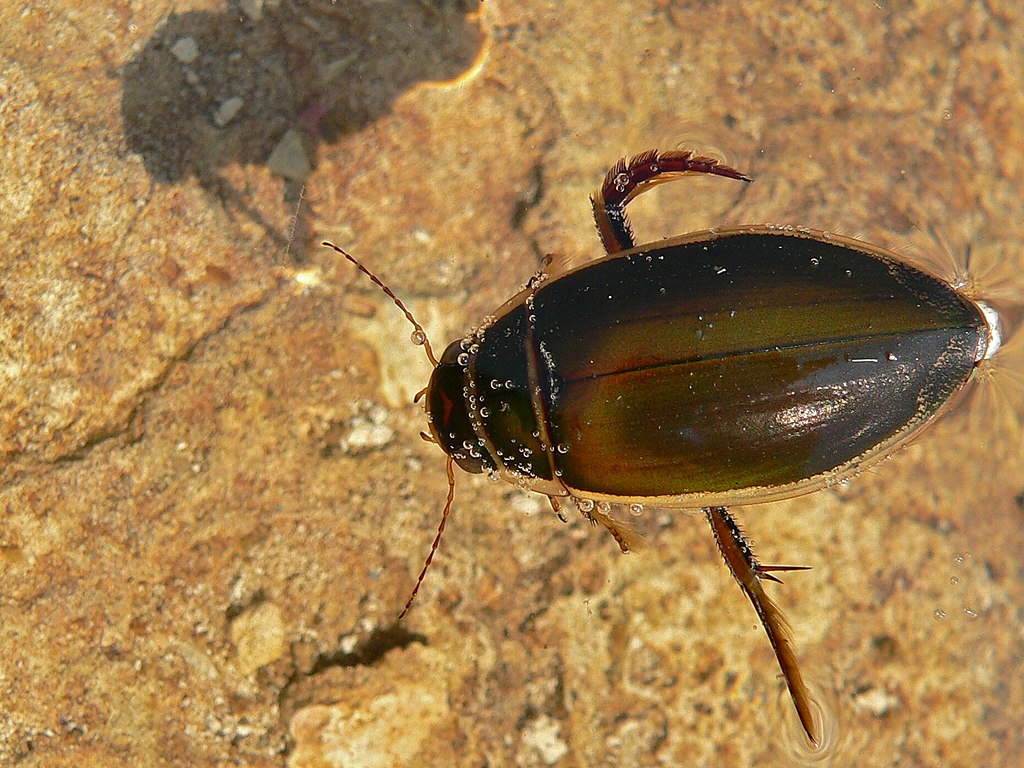
Relentless hunters and master survivors, diving beetles let nothing stand in their way as they hunt and thrive. When lakes shrink and pools dry under the baking sun, they leave the water at night and fly away in search of a new water body where they can continue their hunt. Their story is a reminder that freshwater ecosystems are shaped by extraordinary creatures, and its remarkable adaptations show just how inventive nature can be!
Next time in the series of Tiny but Might we flip the world upside-down with another freshwater marvel – the backswimmers!
Featured image: The great diving beetle (Dytiscus marginalis), adult female. Photo by Bram Koese licensed under CC BY-SA 4.0