
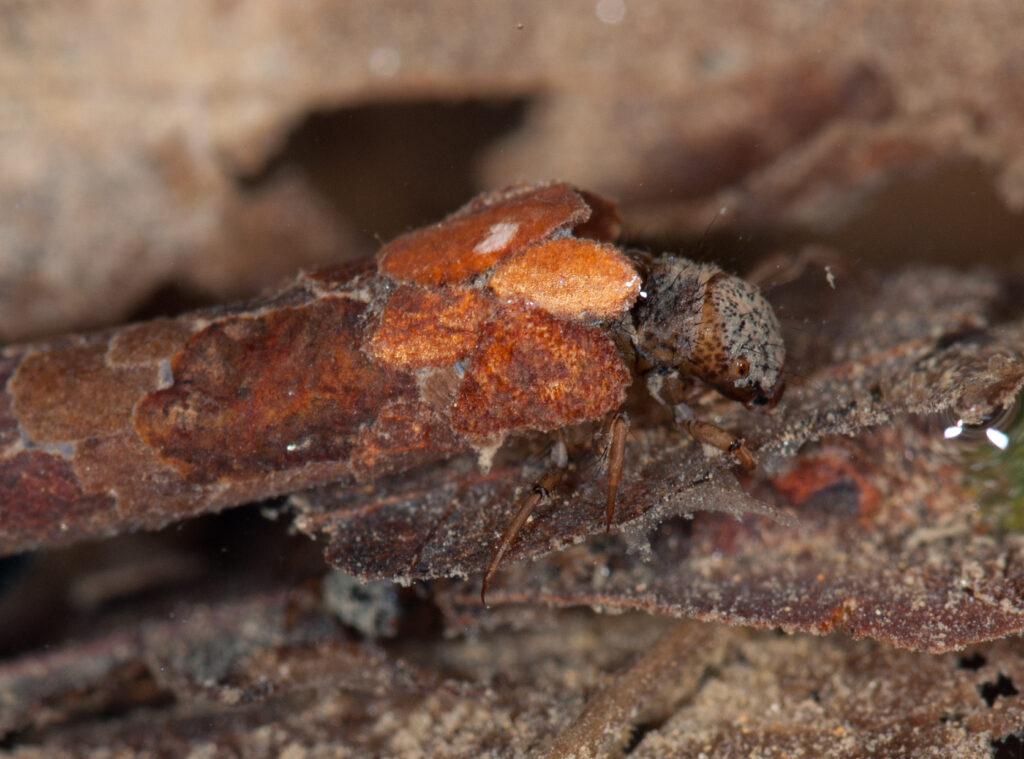
To end on a high note, meet the true divas of the freshwater’s habitats: the larvae of case-building caddisflies (order: Trichoptera). These are the most fashionable tiny creatures you’ll find underwater.
When Style Meets Survival
Caddisflies larvae construct their own portable homes, protective cases they carry wherever they go. These cases serve as both protection from predators and excellent camouflage. To build them, they use special kind of silk produced by glands on their lower lip (the same one dragonfly larvae used for hunting). This silk works like underwater glue allowing them to stick together material used to build cases, such as small pebbles, sand grains, plant debris or even small sticks.
As the larvae grows, they don’t abandon their home, instead they constantly expand and repair their cases, piece by piece. Over time, these cases can host other life, like sponges and algae!
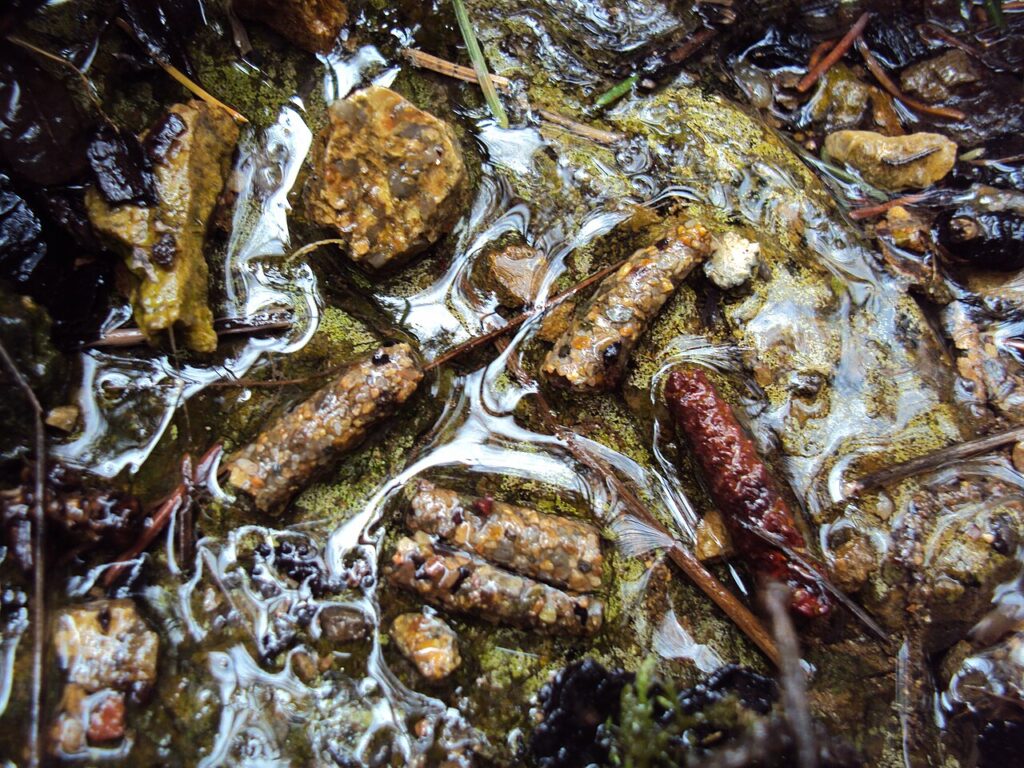
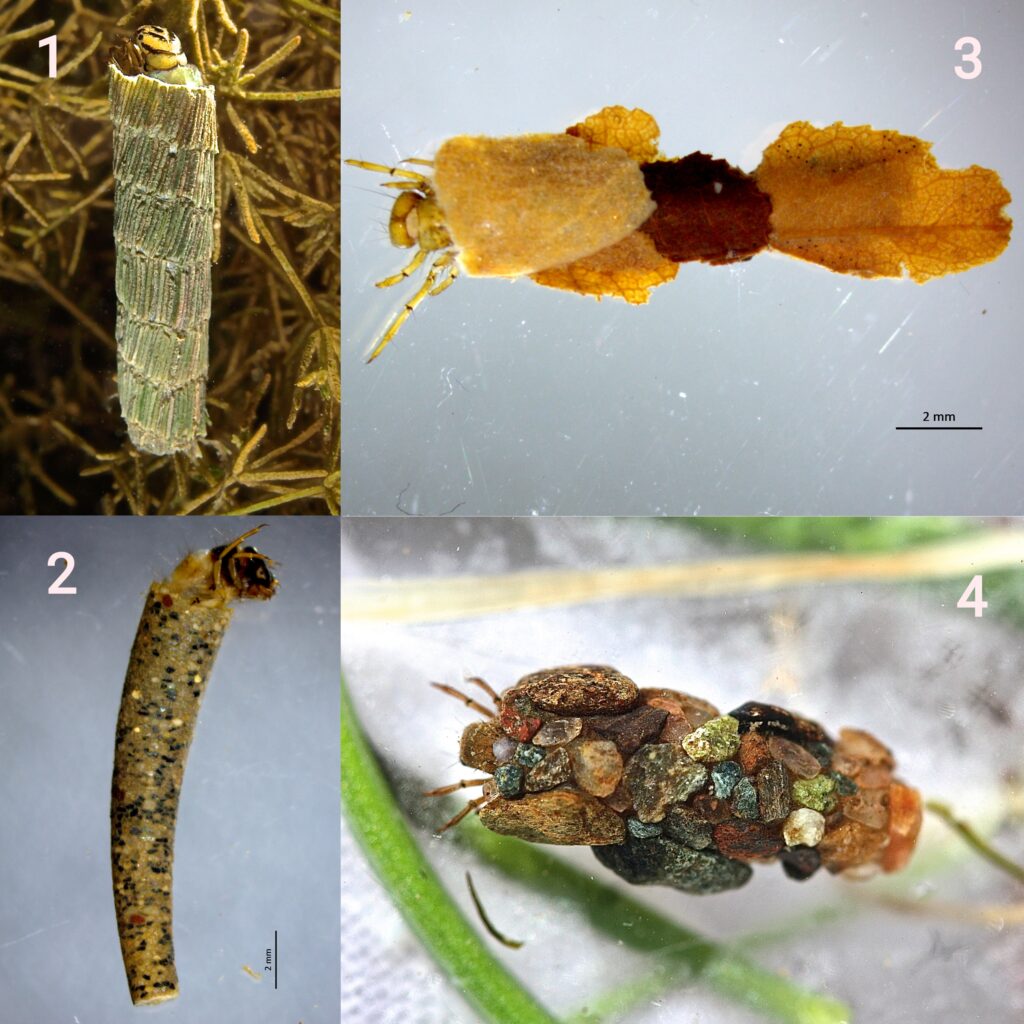
The material they use to build the cases depends on the species, as well as on the environment. Some prefer sand, others use plant material. Experiments have shown just how flexible they are; when their usual materials aren’t available, caddisfly larvae will use anything available, even rare minerals, pearls and gold!
Built to Last
Their ability to adjust to different habitats is part of what makes them so widespread. You can spot them in fast flowing mountain streams, as well as in your local pond. Interestingly, in running water, they often use heavier material for their cases to increase their overall weight, preventing them from being washed downstream.
Recycling in Freshwaters
Caddisfly larvae are also sensitive to water quality, and some species are therefore ecological indicators of fresh waters. Most feed on aquatic plants, algae, diatoms, or plant debris, helping to control plant growth and break down organic material. In turn, they are also important food source for other animals, particularly trout, eels and other fish.
Tiny but Mighty
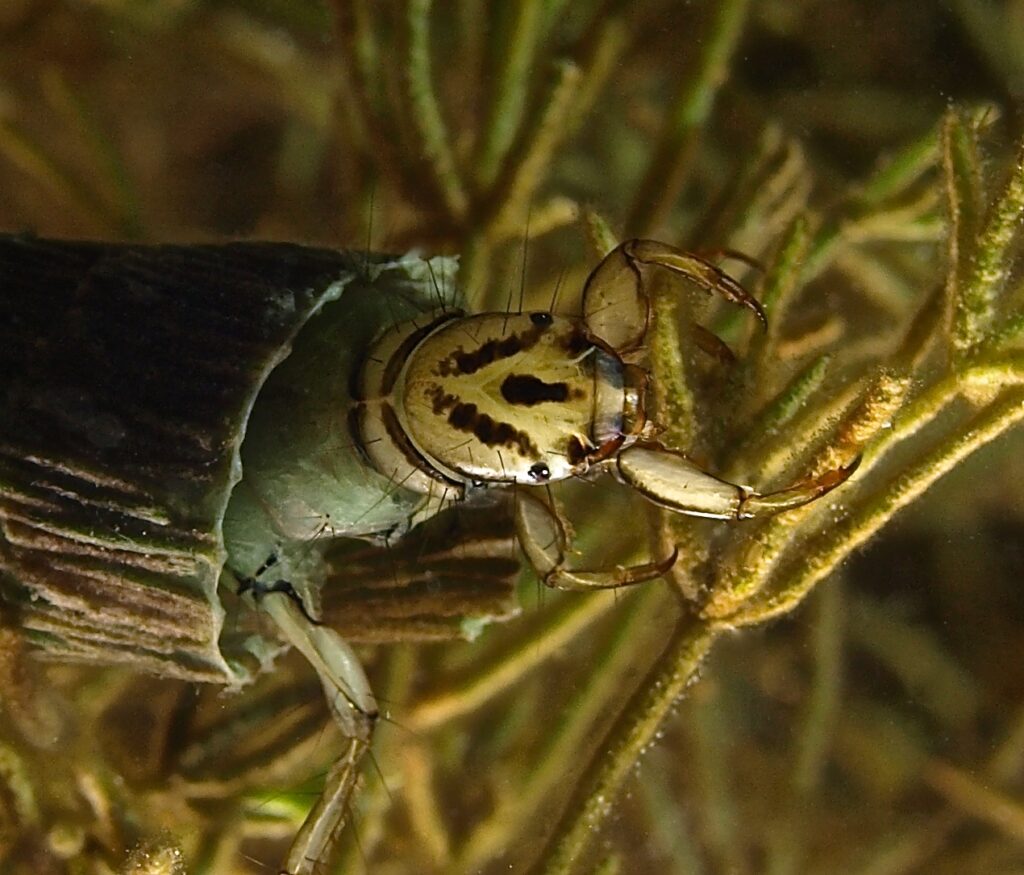
The Tiny but Mighty series showed how freshwater insects, despite their small size, play important roles in their ecosystems. They are crucial players in aquatic food webs, serving as prey, predators, or important decomposers. Most species spend their early lives as larvae underwater, with adults emerging to live on land or in the air. In doing so, they form an important bridge between aquatic and terrestrial ecosystems, moving energy and nutrients across these environments. Freshwater insects are truly remarkable, and we hope this series captured just how fascinating they are.
So next time you see a leaf, pebble, or little stick drifting along the bottom of a stream, take a closer look, it might just be a caddisfly larva on the move, proudly carrying its handcrafted home!
Featured image: Caddisfly larvae, Author: Wayne National Forest, licensed under CC BY 2.0