
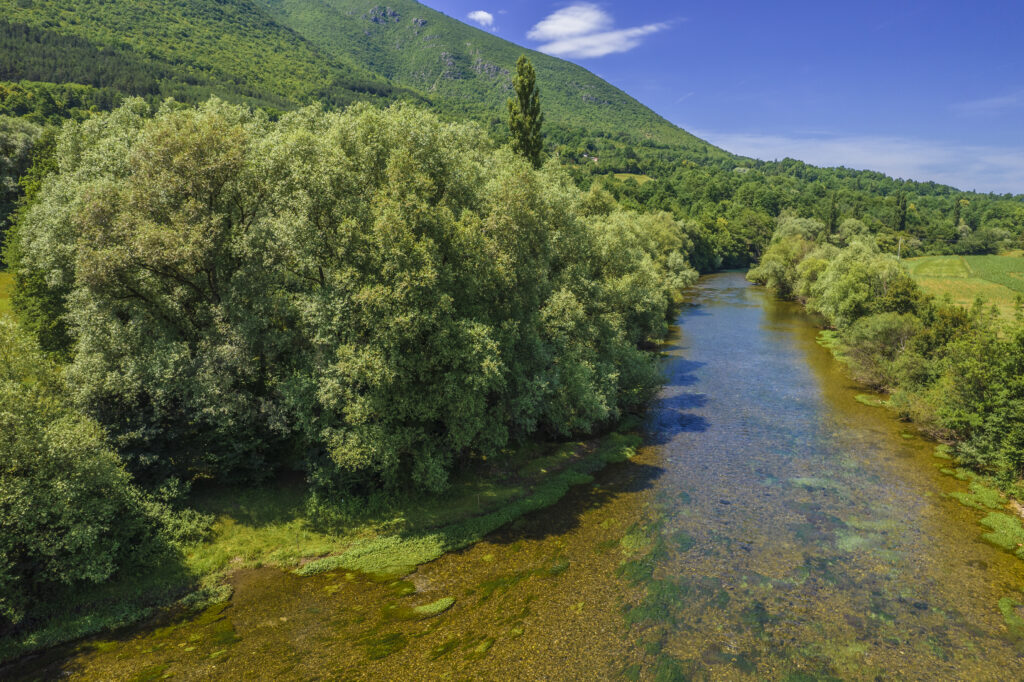
We often picture a clear divide between water and land. Fish stay in rivers, forest belong to mammals, and canopy is ruled by birds and insects. But nature is far more complex than that. Energy and nutrients constantly move between freshwater and terrestrial ecosystems, quietly shaping life on both sides.
Over the past few decades, scientists have discovered that this boundary is far more permeable than once believed. Freshwater and terrestrial ecosystems don’t just influence each other — they are deeply intertwined.
How Aquatic Predators Shape Terrestrial Life
What if we told you that the presence of fish living underwater can influence snakes and flowers on land?
A well-known ecological study by Knight and colleagues demonstrated the effect an aquatic top predator can have on the terrestrial ecosystems. In their experimental ponds, fish acted as top predators, feeding on dragonfly larvae. Fewer larvae meant fewer adult dragonflies emerging onto land. With fewer dragonflies, bees had less predators and could pollinate the flowers more, resulting in increased plant reproduction near the ponds. In ponds without fish, the opposite happened. More dragonflies meant bees avoided the area or fell prey to them, and pollination declined.
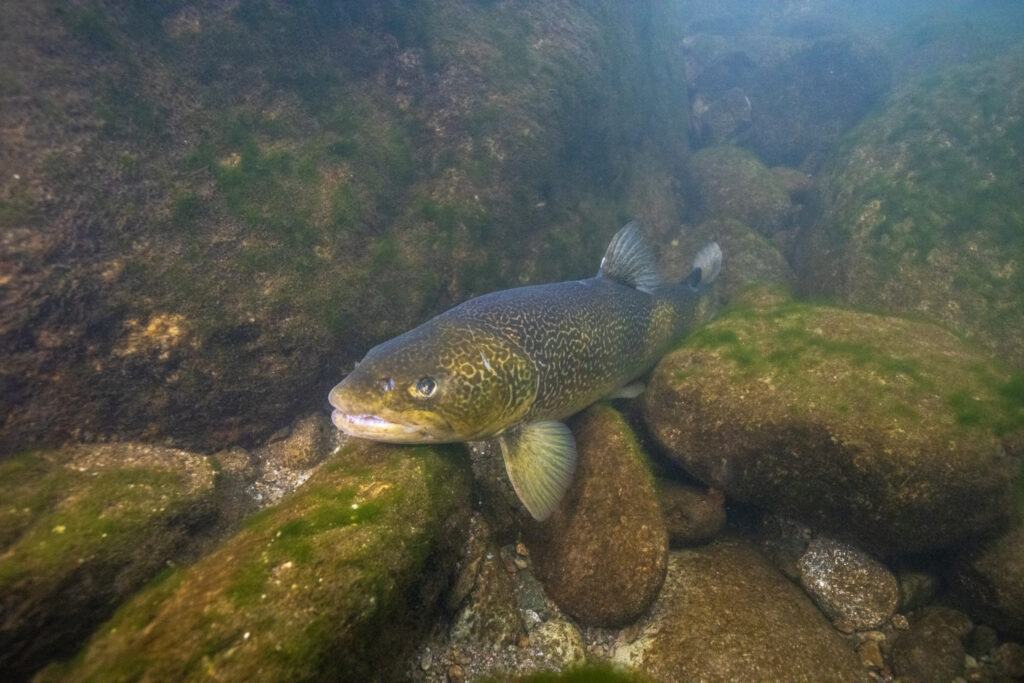
Now don’t think that dragonflies are the villains. Each ecosystem has its own balance, and problems arise when that balance is disturbed, especially by invasive species. A striking example comes from the high mountain lakes in Sierra Nevada. When trout were introduced, they devoured on frog eggs and tadpoles. As frog populations declined, so did garter snakes that depend on frogs for food. A single introduced top predator triggered a chain reaction across ecosystem boundaries, a phenomenon ecologists call a trophic cascade.
When Rivers Feed the Forest
In larger, flowing freshwater ecosystems like rivers, these interactions are hard to detect, but are therefore, even more interesting.
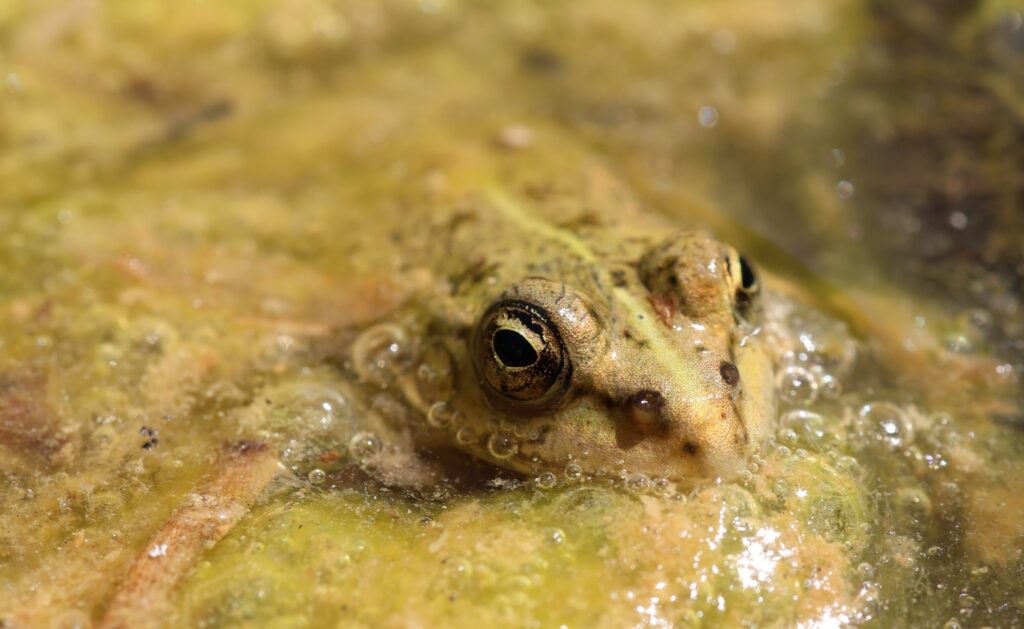
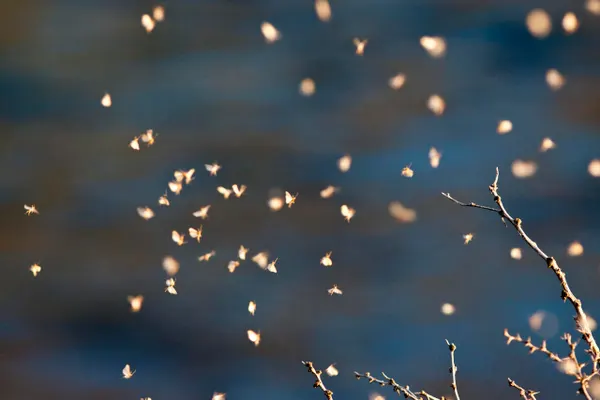
Many ground‑dwelling predators depend on what scientists call aquatic subsidies: resources that originate in water but get transferd to land. One of the most important examples are emerging aquatic insects. When they leave the water to become adults, they become a crucial food source for spiders, beetles, and other predators along riverbanks.
Research shows that they can strongly compete for these same insect resources with invasive fish. By consuming large numbers of aquatic insects before they emerge, invasive fish reduce the food available to riparian predators. As a result, along some riverbanks, spider populations have dropped sharply because their main food supply never makes it out of the water.
One Connected System
Nature does not operate in isolated compartments. It functions as a tightly connected network where a seemingly small change, adding or removing a predator, can trigger cascading effects across multiple ecosystems.
Although scientists have uncovered many of these cross-ecosystem connections, countless others remain hidden. This complexity is exactly why conservation efforts must be holistic and grounded in science. Protecting one ecosystem often means protecting several others at the same time.
Findings mentioned in the article are from the following scientific papers:
- Paetzold, A., Schubert, C. J., & Tockner, K. (2005). Aquatic Terrestrial Linkages Along a Braided-River: Riparian Arthropods Feeding on Aquatic Insects. Ecosystems, 8(7), 748–759. https://doi.org/10.1007/s10021-005-0004-y
- Matthews, K. R., Knapp, R. A., & Pope, K. L. (2002). Garter Snake Distributions in High-Elevation Aquatic Ecosystems: Is There a Link with Declining Amphibian Populations and Nonnative Trout Introductions? Journal of Hepetology, 36 (1), 16-22. https://doi.org/10.2307/1565796
- Knight, T. M., McCoy, M. W., Chase, J. M., McCoy, K. A., & Holt, R. D. (2005). Trophic cascades across ecosystems. Nature, 437(7060), 880–883. https://doi.org/10.1038/nature03962
- Jackson, M. C., Woodford, D. J., Bellingan, T. A., Weyl, O. L. F., Potgieter, M. J., Rivers‐Moore, N. A., Ellender, B. R., Fourie, H. E., & Chimimba, C. T. (2016). Trophic overlap between fish and riparian spiders: Potential impacts of an invasive fish on terrestrial consumers. Ecology and Evolution, 6(6), 1745–1752. https://doi.org/10.1002/ece3.1893
Featured image: Ribnik River (@ChipCarroon)