

 Hrvatski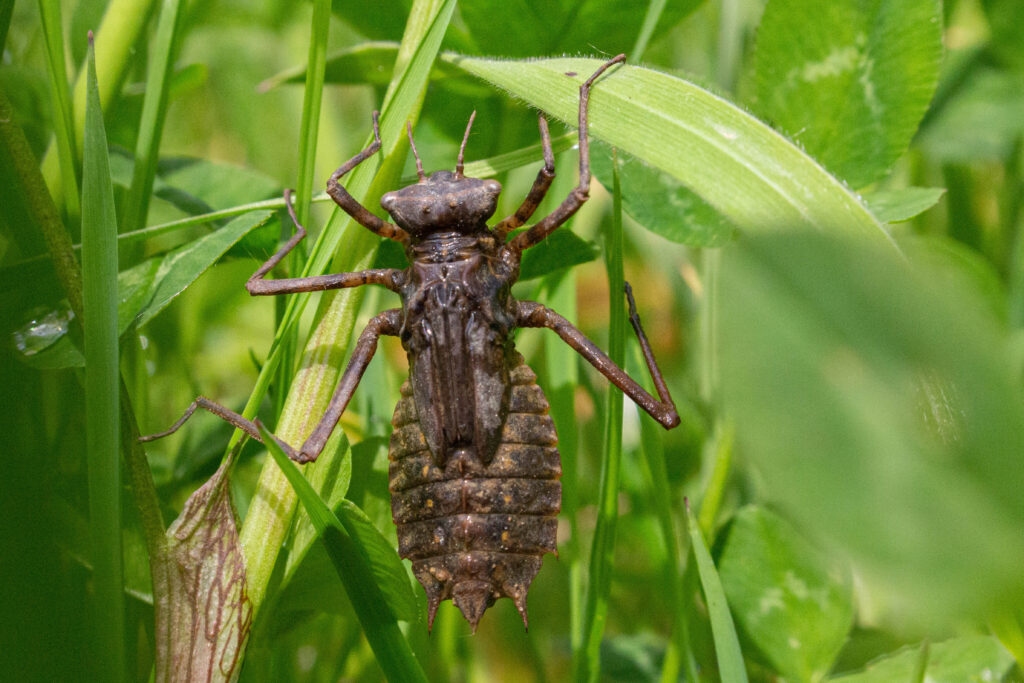
A series of Tiny but Mighty
Freshwater ecosystems are full of life. We tend to notice the obvious residents first: fish darting through reeds, frogs calling from pond edges, or we catch the splash of a beaver’s tail. But beneath the surface lies a far richer, and largely unseen world, powered by tiny yet mighty organisms, that quietly keep rivers and lakes alive.
Among the most important of these hidden creatures are freshwater insects. Some spend their entire lives underwater, while others live there only in the early stages of life (e.g. larvae). Together they make up the backbone of the freshwater ecosystems, occupying almost every imaginable habitat, from fast-flowing mountain streams to still garden ponds. Their adaptations to different habitats and underwater life are remarkable, so stay with us as we dive into the lives of a few freshwater insects that prove that small creatures can have a mighty impact. Let’s explore this diverse and fascinating world together.
Undercover dragons
Dragonflies (order: Odonata)
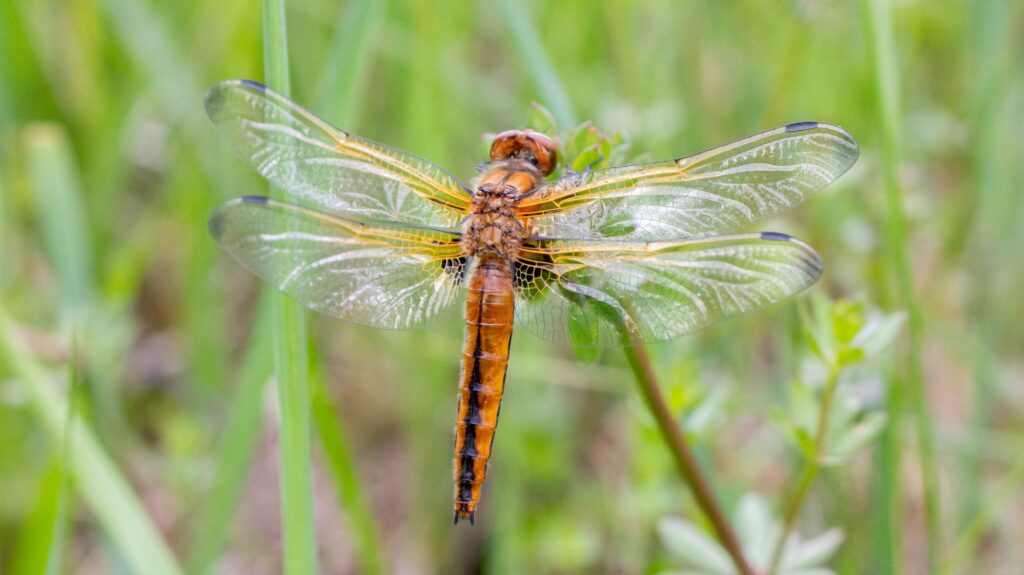
We start this series with fearless predators, dragonflies! They are amongst the most efficient predators in the animal kingdom, with a hunting success rate of more than 90%! While we usually picture the adults as fast and colorful acrobatic hunters patrolling the edges of lakes and rivers, not many know that this airborne spectacle is only the “grand finale” of their lives.
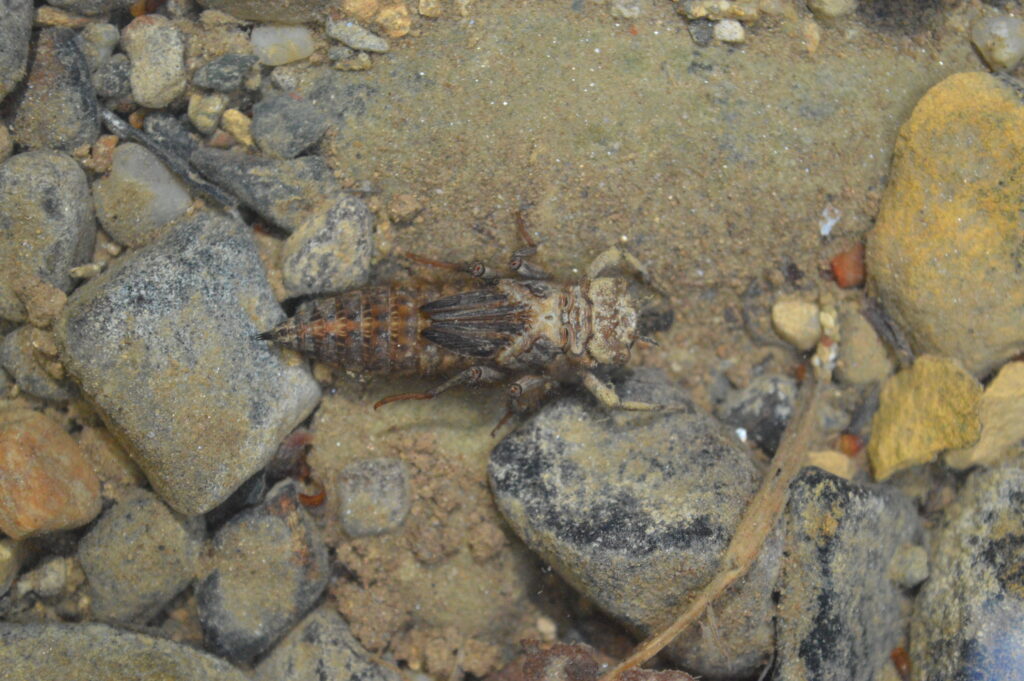
Dragonflies spend most of their lives as larvae living underwater for months or even years. Down on the river or lakebed, they blend seamlessly into gravel, sand, mud or vegetation, waiting patiently until the prey comes close. Unlike their high-speed adult form, dragonfly larvae are ambush predators. Their secret weapon is extendable, hinged jaw (picture it as knife, fork and plate all in one) which can shoot in an instant to snatch their target.
Their diet is varied and often ruthless; it often includes other insect larvae (even other dragonflies), crustaceans, worms, snails, leeches, tadpoles, and even small fish. They act as important predators, but also serve as valuable prey, making them a vital part of the freshwater food chain. Because some species are highly sensitive to changes in water quality, biologists and environmental professionals often use them as reliable bioindicators to assess the ecological status of freshwater ecosystems.
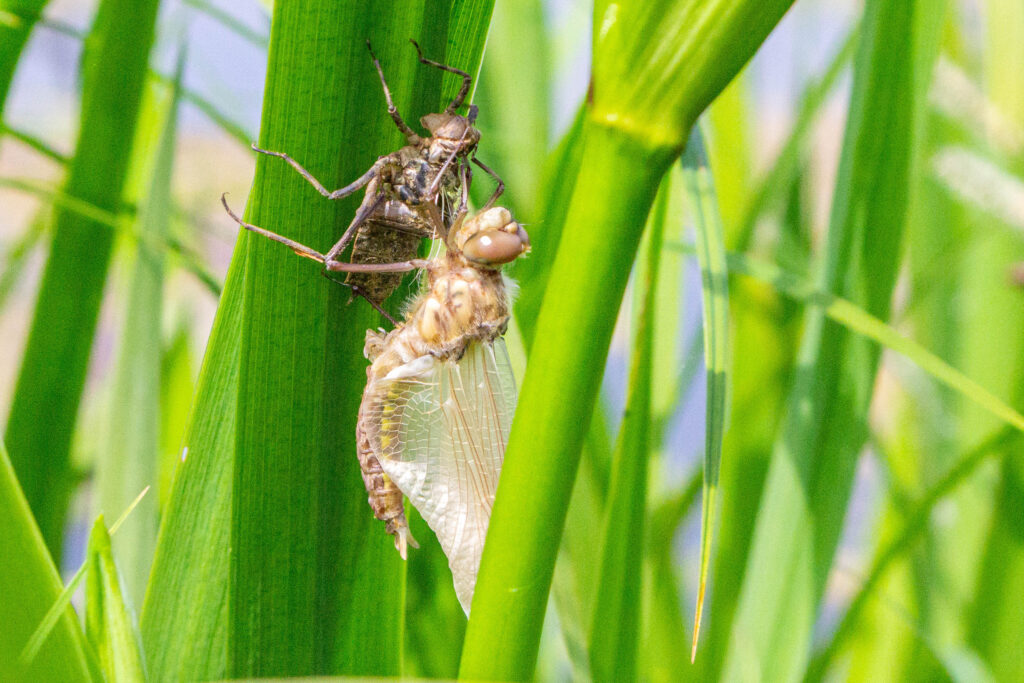
All of this happens long before they ever spread their wings in the sky and show us their true colours. Beneath the surface, while waiting for the day they finally emerge, dragonfly larvae shape the freshwater world and support the entire food web!
Did you know dragonflies help regulate mosquito populations, as both larvae and adults consume them in large numbers? Now you do.