
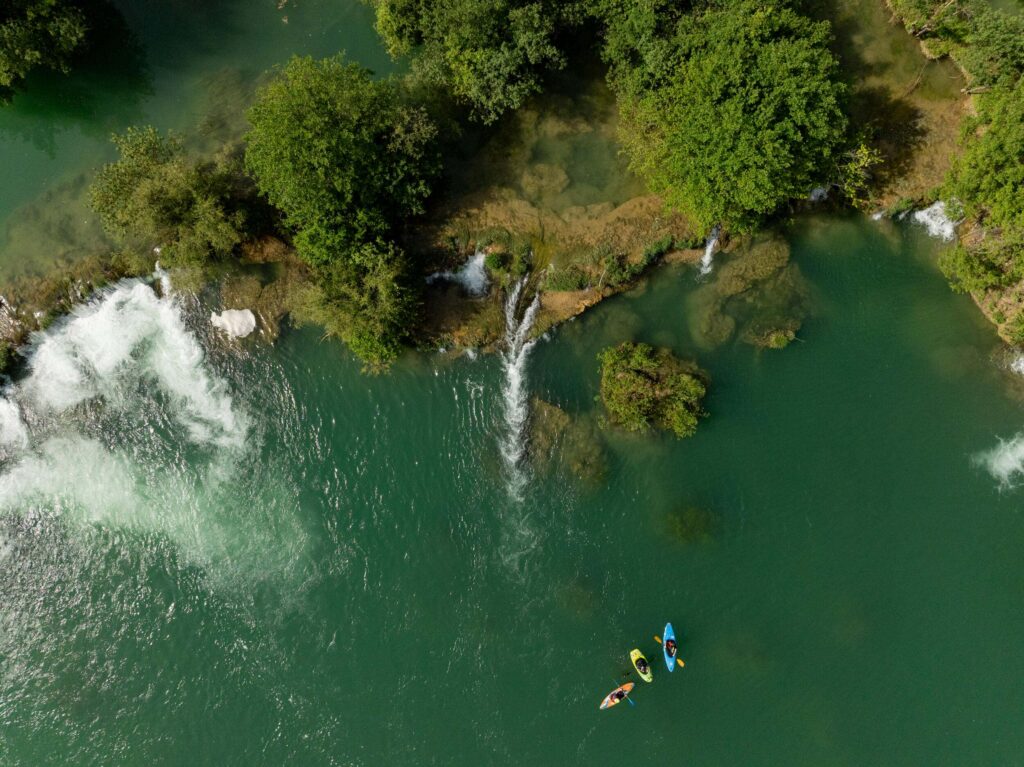
The Mrežnica and Tounjčica rivers are renowned for their stunning waterfalls, yet they are more fragile than they appear. New expert recommendations reveal the pressures they face and, more importantly, how we can help protect them.
Mrežnica and Tounjčica are true natural treasures of Croatia, renowned for their crystal-clear waters, tufa waterfalls, and exceptional biodiversity. Yet the very features that make them unique also make them vulnerable. To support their long-term conservation, experts from BIOTA, commissioned by The Nature Conservancy (TNC), prepared two expert studies that not only identify the main threats facing these rivers but also propose practical, implementable solutions for their restoration and sustainable management.
At the heart of these recommendations are Nature-based Solutions: measures that work with natural processes rather than relying on concrete structures and intensive engineering interventions. These approaches help restore ecosystem functions while delivering benefits for local communities, visitors, and the rivers themselves.
Tufa: A Living Rock
Tufa barriers are one of the defining features of the Mrežnica and Tounjčica rivers. They are formed through the deposition of calcium carbonate from the water, a process in which mosses play a crucial role. For this reason, tufa is not simply a rock formation. It is a living structure that creates waterfalls and provides habitat for numerous plant and animal species.
Unfortunately, one of its greatest threats is human activity. Walking and jumping on waterfalls, as well as dragging hard plastic or wooden boats across them, causes mechanical damage. The tufa breaks apart, while the moss layer essential for new tufa formation is also destroyed.
How can pressure on the waterfalls be reduced?
- Use rubber boats instead of hard plastic ones.
- Direct visitors towards less sensitive areas of the river.
- Educate visitors and tourism service providers about the importance of protecting tufa formations.
Clean Water Through Natural Treatment Systems
Without good water quality, there can be no healthy river and no tufa formation. One of the main challenges comes from settlements that lack adequate wastewater infrastructure, allowing untreated wastewater to enter watercourses.
To address this issue, experts recommend wastewater treatment solutions for households and small communities, such as constructed wetlands or other plant-based treatment systems. These systems use natural filtration and biological processes to remove pollutants, significantly reducing the amount of organic matter and nutrients entering the river.
The benefits include:
- Reduced risk of eutrophication (excessive algae growth).
- Protection of sensitive species, including the freshwater limpet and rheophilic fish species.
- Maintenance of the water quality conditions necessary for continuous tufa formation.
Riverbanks Protected by Nature
To stabilize riverbanks and prevent erosion, nature-based approaches are increasingly favored over concrete reinforcement structures.
Recommended measures include the use of fascines (bundles of branches), other natural materials, and the planting of native tree species such as willow, alder, poplar, and ash.
Restored riparian vegetation helps to:
- Stabilize soil and reduce erosion.
- Provide shade and improve habitat quality.
- Increase the resilience of river ecosystems to climate-related and other environmental pressures.
Working Together for Mrežnica and Tounjčica
Protecting this unique river system is a shared responsibility. Institutions, local communities, experts, organizations, and visitors all have a role to play.
Implementing the proposed measures is not only about ecological restoration. It is also about creating a sustainable model in which people and nature can thrive together.
Only through collective action can we ensure that the tufa waterfalls, clear waters, and rich biodiversity of the Mrežnica and Tounjčica rivers remain preserved for generations to come.