
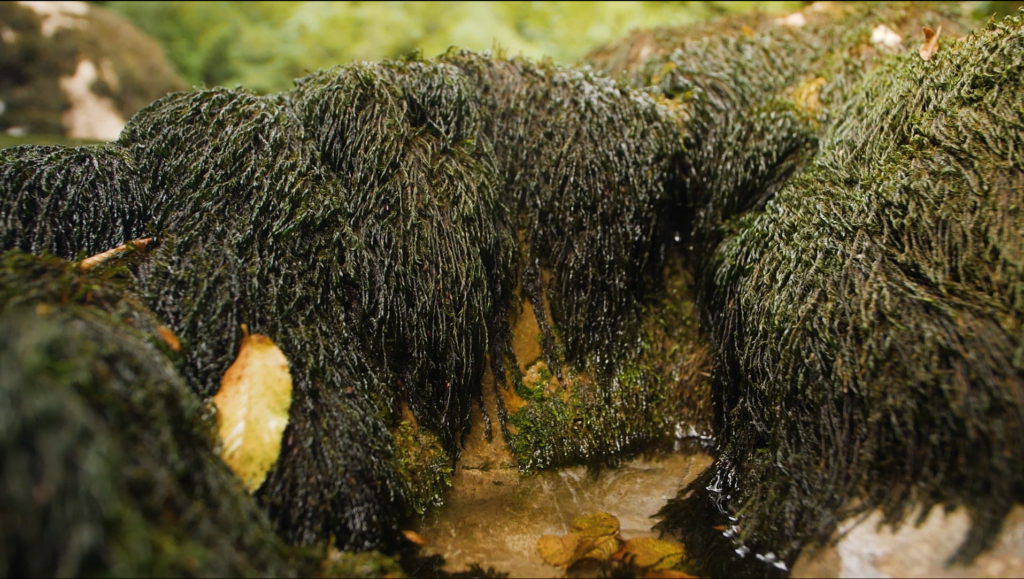
When we visit the Mrtvica Canyon, our attention is usually drawn to its emerald waters, steep cliffs, and countless waterfalls. However, one of the most important elements of this unique ecosystem is hidden in places that most visitors barely notice. Mosses, the tiny green plants that cover rocks, riverbanks, and waterfalls, play a far greater role than it may seem at first glance.
Although they are among the oldest land plants on Earth, mosses remain an irreplaceable part of natural ecosystems today. Like sponges, they retain moisture, protect soil from drying out and erosion, and create conditions that support the life of many other organisms. Thanks to them, small, humid habitats develop, providing ideal conditions for a variety of plants, fungi, and tiny animals.
The Mrtvica Canyon offers ideal conditions for their growth. Clean water, constant humidity, the shade provided by steep cliffs, and diverse limestone substrates have enabled an exceptionally rich moss flora to thrive. Research conducted in the canyon has documented as many as 122 species, representing approximately one-fifth of all moss species known in Montenegro. For an area stretching only a few kilometers, this is an extraordinary concentration of biodiversity.
But the most fascinating part of the story begins there.
In Mrtvica, mosses are not only inhabitants of the canyon: they are also its builders. Calcium carbonate carried by the water is deposited on their surfaces, gradually forming tufa, a porous rock characteristic of karst rivers. Over decades and centuries, this process creates tufa barriers, waterfalls, and other natural formations that give the canyon its distinctive appearance.
In other words, without mosses, part of the landscape we now perceive as natural and permanent simply would not exist.
Tufa formations develop very slowly and depend on a delicate balance between water, living organisms, and geological processes. Any change in water quality or natural conditions can affect processes that occur almost imperceptibly, yet are responsible for some of the most beautiful features of our rivers.
This is why mosses are much more than a green carpet along the riverbank. They are indicators of a well-preserved natural environment, an important component of the canyon’s biodiversity, and silent allies in the creation of its natural values.
While most visitors to Mrtvica photograph its waterfalls, pools, and cliffs, few realize that behind this striking landscape lies a world of tiny plants that has been helping to shape it for centuries. That is one of Mrtvica’s true distinguishing features: its greatest treasures are not always the ones that can be seen at first glance.