
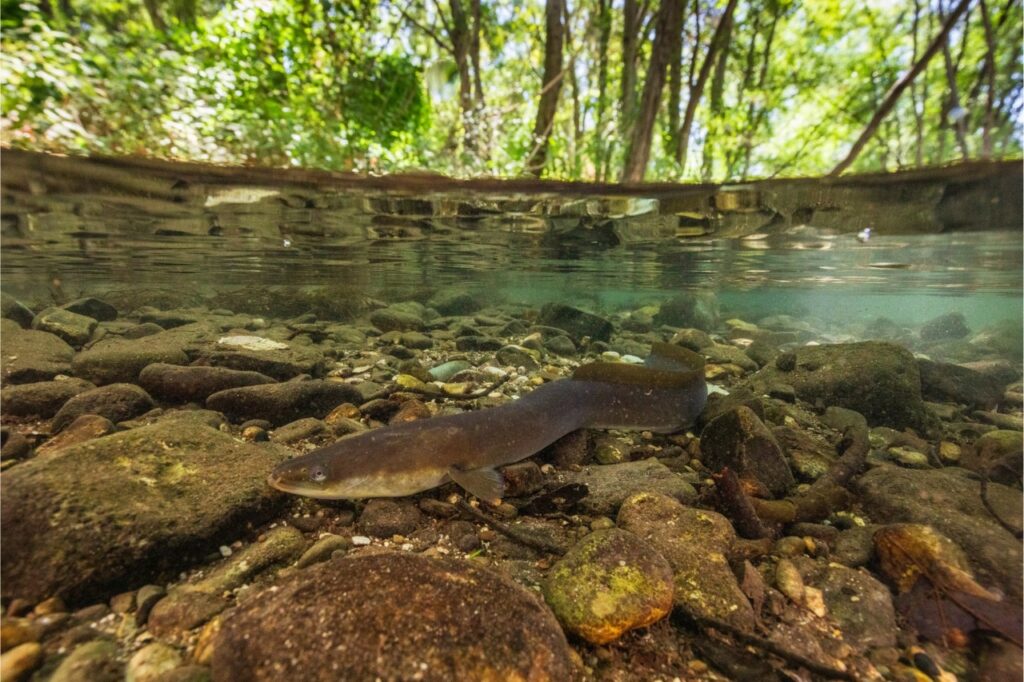
Eels are among the greatest mysteries of the animal world. They have been studied since the time of Aristotle, yet despite centuries of research, many questions about their lives remain unanswered. It took scientists centuries to discover where European eels come from, and today we know they undertake one of the longest migrations of any fish species. This is the story of two eels that set out on the same journey, only to have fate lead them down very different paths.
Far, far away…
…in the Sargasso Sea, in the middle of the Atlantic Ocean, larvae hatch from eggs. Soon they begin their first journey, carried almost 6,000 kilometres by ocean currents. Along the way, they gradually develop into small, transparent glass eels. Once they reach Europe, their paths diverge, and as they search for new habitats, their bodies slowly take on a yellowish colour.
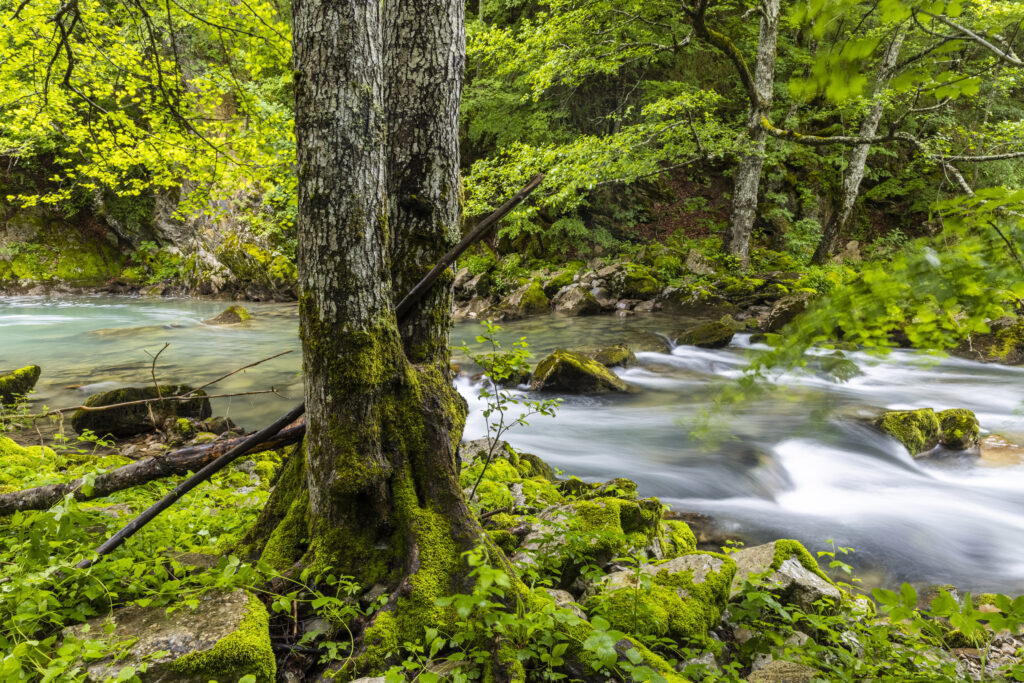
The river where the first eel found its new home was one of the last river free from weirs and dams, allowing it to swim unhindered to its ideal habitat. It found its place there and would remain until adulthood. The second eel began its upstream journey in a different river. But its path was interrupted by numerous culverts, weirs and dams. Crossing each one cost time and energy, and it often took days before it could continue upstream. Exhausted, it eventually found a habitat where it could grow and mature.
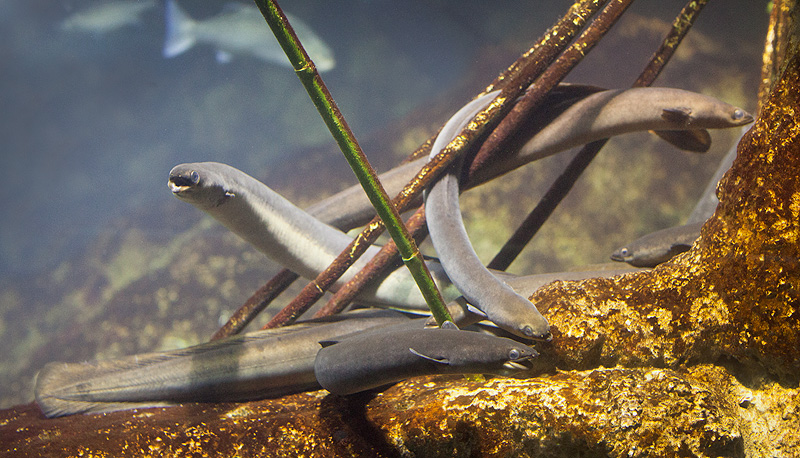
About fifteen years passed. Now much larger, the eels began developing a silvery color on their undersides and a darker shade on their backs, helping them avoid predators. Both had matured into adult females, stopped feeding, and redirected all their energy toward the return journey to the Sargasso Sea, where they would spawn.
The first eel headed downstream and, carried by the river flow, reached the sea without encountering any barriers. Nearly 6,000 kilometers of ocean still lay ahead, but it had enough strength to complete the journey. In the Sargasso Sea, where its life had begun, it spawned and completed the circle.
The second eel was not so fortunate. On its downstream journey, it encountered the same barriers it had struggled to pass on the way upstream, as well as a newly built hydropower plant. Some obstacles delayed it for hours or even days, consuming precious energy it could not replace because eels no longer feed during this stage of their life cycle. After crossing a third barrier, it reached a large new dam. On its very first night there, the hydropower turbines were switched on. Exhausted from its long journey, the eel no longer had the strength to resist the powerful current. Its journey came to a tragic end there, thousands of kilometers short of its destination.
Dam Removal
In this story, only one of the eels made it back to the Sargasso Sea. Unfortunately, many never reach their destination. They become trapped in rivers or die trying. Thousands of dams, weirs, and other barriers across Europe’s rivers disrupt the migration routes of countless fish species. For the European eel, a critically endangered species, a river is not just a habitat. It is a route that must be travelled twice during its lifetime. Every obstacle along that route can determine whether it succeeds in completing its thousands-of-kilometers-long journey.
The turbines were the final obstacle in the second eel’s journey, but not the only one. By the time it reached them, it was already weakened from overcoming barriers along the way. And it is precisely these kinds of barriers, obsolete weirs, small dams, and culverts that no longer serve a purpose, that are most commonly being removed today.
October 8 marks World Dam Removal Day, an opportunity to ask which obstacles in our rivers are truly necessary, and which merely stand in the way of life. For many species, a free-flowing river is not simply desirable. It is a matter of survival. The Nature Conservancy is part of the Dam Removal Europe coalition and, in Southeast Europe, works with local partners on river restoration strategies.
Our second eel never made it to the Sargasso Sea. Whether the next one does depends on how many barriers we remove from its path.
Featured image: European eel (Anguilla anguilla) © Bruno D’Amici/TNC